Red-Eared Slider

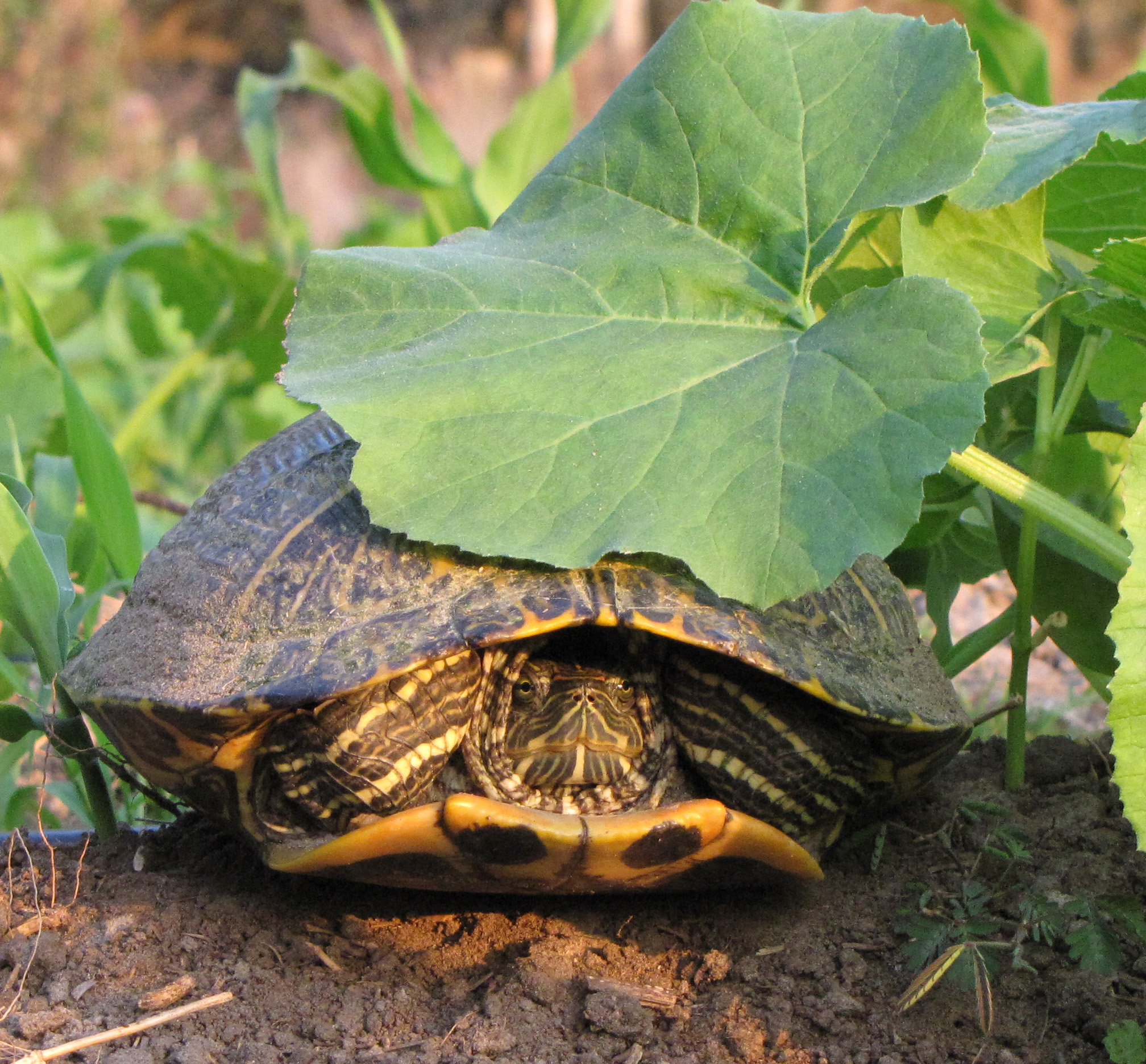
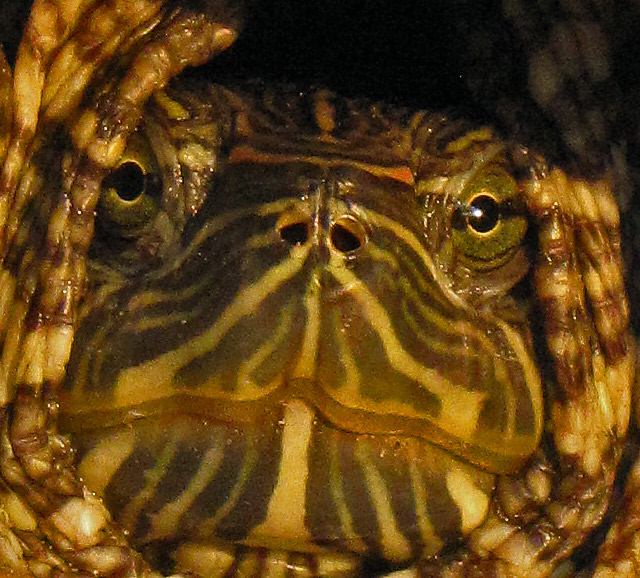
A friend of the farm, this red-eared slider, stopped by while I was working in the garden.  He plodded across the rows until he got to me, then stopped under a squash leaf to watch me work for a while.

I’m not sure what he was thinking about while he watched me work.  Maybe he was curious or maybe he was just waiting for me to get out of his way. 

End of May Harvest

End of May Harvest

Tomatoes, beans, eggplant, peppers, collards, carrots, zucchini, yellow squash, butternut, scaloppini, ginger, basil, oregano, and more!

Friends, we invite you to Coastal Bend Health Foods today and tomorrow to shop at a local store that would love to have your business.

To prepare for your Memorial Day weekend celebration, we offer a wide variety of freshly picked produce.  We offer fresh chickens today and tomorrow.

Stop by Kimmi’s store and discover the difference our heritage farming methods bring to the flavor and health of your food.

Daily Harvest for End of May

Edible Squash Blossom

Tomatoes, large, roma,  cherry, and roma grape.  Eggplant, Japanese and black beauty.

String beans:  stringless, purple pole beans, French long, Kentucky Wonder, and Mayflower beans (these heritage beans were brought over on the Mayflower, and the seeds have been continued unchanged for 400 years, and you can enjoy them grown on our farm).

Squash:  acorn, butternut, gray-striped zucchini, yellow straight and crookneck squash, dark green zucchini, yellow scallopini, Mexican, Italian long, and spaghetti.  We also offer our beautiful edible squash blossoms upon request, perfect for stuffing with ricotta, cream cheese, or other fillings, and so delicious.

Carrots, collard greens, and kohl rabi.  Our companion planting methods allow us to continue to harvest all of these winter vegetables until July.

Thai, serrano, and jalepeno peppers.  Coming soon, sweet peppers.

Ask Kimmi about our freshly picked ginger, as well as basil, oregano, and thyme.

Fresh Chickens Today and Tomorrow

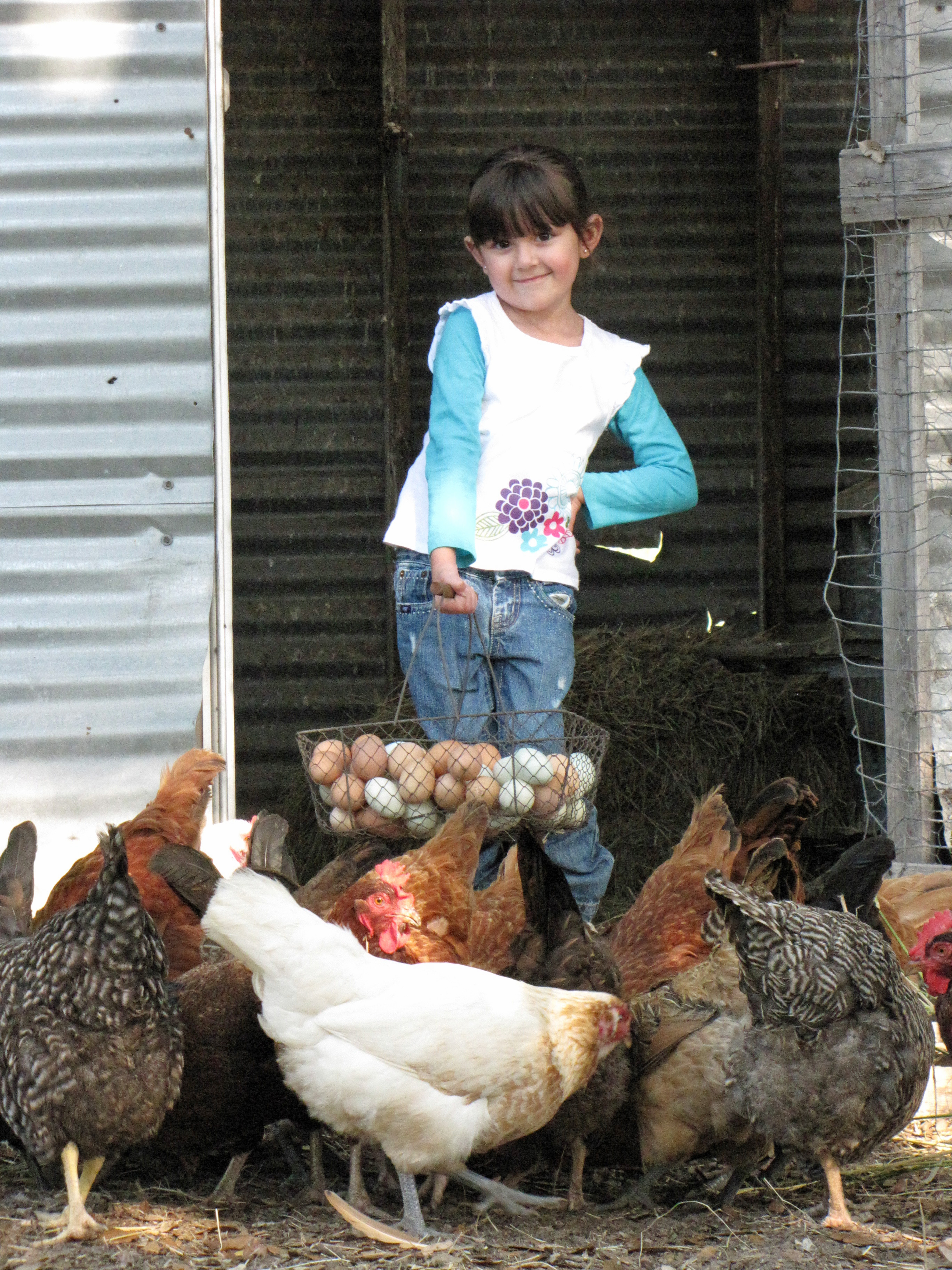
Enjoy fresh broilers in the 3, 4, and 5 pound range, as well as half-chickens, perfect sizes for roasting.  We offer blue, green, dark brown, and speckled eggs, lovingly gathered every day.

Pastured Pork on the Grill

Get the grill ready for pork chops!  If you love hamburgers, try using our ground pork for the best burger ever.  We also have roast, ribs, and bacon.

Thank you friends for shopping locally!  Please enjoy!

Beans on Corn Stalk Trellis

Tres Hermanas: Harvesting beans from a corn stalk trellis.

The Invention of Geometry

Herodotus, in his Histories, documents the strange and remarkable events of an ancient world that is completely foreign to us.  In some ways, however, he describes a world very similar to our own.

A Faithful Wife

Here is an example of the strange:  In Book II, Herodotus tells the story of an Egyptian king who was blinded by the gods for throwing his spear into the raging Nile, to try to tame it.  The only cure for his blindness was to wash his eyes with the urine of a woman who had always been faithful to her husband.  The king tried the urine of his wife–and it did not work.  Yikes!

He obtained samples from all the women of the royal court; still nothing.  Finally, he went door to door throughout the countryside of Egypt and at long last, after thousands of wives, found urine that worked.  The king rounded up all the women who had given samples into a huge walled city, except the last woman, and burned the city to the ground.  The king married the positive sample giver.

Herodotus does not say how any of the husbands reacted to any of this.

Inventing Geometry

The urine/eye king was Pheros.  Pheros’ father, Sesotris, invented geometry.

In Ancient Egypt, the Nile River basin was a floodplain.  Each year, the waters would slowly rise all the way to the hills, then recede and leave rich fertile soil in the wake.  Farmers would grow their vegetables and grains in these floodplains before the next annual flood.

The water rose and receded to different levels each year, so the surface area under cultivation changed from one year to the next.  When the Egyptian tax assessors went out to calculate property values, they had no consistent guide, because the math to measure surface area did not exist yet.  Each year the fields were different sizes.  Farmers became very adept at arguing down their tax bills by claiming they had less land under production than the previous year.

To solve the problem of taxing the Nile floodplain, King Sesotris invented geometry.  Geometry, a new technology, was a powerful tool for the government in collecting revenue.  It was very accurate.

My Property Tax Bill Just Arrived

I remembered this history about the Egyptians when I got my latest property tax assessment in the mail.  I opened the tax bill and was outraged as usual at the amount, and noticed where it said you could go down and appeal your taxes.

The tax man sat behind his desk in his neat, spare office.  There was a huge map of the county on the wall, with the property lots sub-divided by name, and my small farm was barely a dot on the map.  Facing him on his desk were pictures of his family and a large computer monitor.

I have met the tax man around town several times and I hate to admit it, but he is a pretty good guy.  If you have to have a tax guy, this is the one you want.  Of course, I didn’t tell him that.  I yelled and hollered at him just like everybody else.

When I offered a protest to my tax bill, the gentleman entered my name and address into his computer.  Then he began to list highly specific details about the structures on my property.  He described the dimensions of my barn down to the inch.

“Okay,” he said, “right here, for example, we assessed taxes for the awning on your barn, which is 10 feet, 6 inches, running 30 feet down the length of the barn”.

“That’s impossible!” I said.  “I only used 10 foot boards on that section!”  A barn, even though it is an agricultural structure, is liable to property tax, about the same as a modest house.

“I’m just telling you what the dimensions are,” he said.

I built my barn from scratch.  I know the length and breadth of every board, not just from my handwritten designs on yellow legal pads, but from physical memory, from lifting up each board, fitting it into place, nailing it down, and grabbing the next board.

Sitting in the tax man’s office, I did some mental math on the 2X6 braces on both ends of the awning, and remembered that I left some lip on the overhang.  Yeah, that might account for 6 inches.

“How can you possibly know this information?” I said.

We Have New Technology

The tax man turned the monitor toward me.  On the screen was a stunningly clear picture of my barn from above.  The details were so vivid that we could see the barely perceptible change in color of the awning from the barn roof.  The tax man slowly focused down, and we could see the bottom edge of some feed bags under the awning.  He continued to dial in the focus and I could see the “Lysse” of Lysse and Eckel across one bag, a section of green water hose, and the broken handle on a feed bucket.

The software program provided a digital overlay of the exact dimensions, length and width, in white script, across every surface of the barn.

“We have new technology,” the tax man said, “that allows us to survey properties from a helicopter, and then this software program provides the dimensions, and that calculates square footage of the structures.”  He showed me the calculations on a spreadsheet on the next screen.  “We rate the structure according to type, and this program calculates your tax bill.  It is very accurate.”

I looked at the screen in something between disbelief and shock.

“So,” he said, “did you want to dispute anything about your barn?”

The Ancient Egyptians, with their eye urine and their new-fangled geometry, would be very interested in this technology.

Moonlighting Sonata #4

I have been playing the local bars for a couple of years, Texas Country, me and another guy.  At first people thought we were homeless when we walked into a bar to play.  But then I started changing out of my farm clothes and cleaning up before gigs, and the other guy had to shave his beard and cut his hair for a court appearance, and then when we walked into a bar for sound check, they thought we were there to hang drywall.

The other guy would drink twelve or eighteen beers in a show, and on top that five or six Jaeger bombs, and other assorted shots people brought up to him through the night, and still he never missed a note, standing in the microphone and wailing, playing most nights past two.  I never said a word to him in all that time about drinking, and he never said a word to me about coffee.

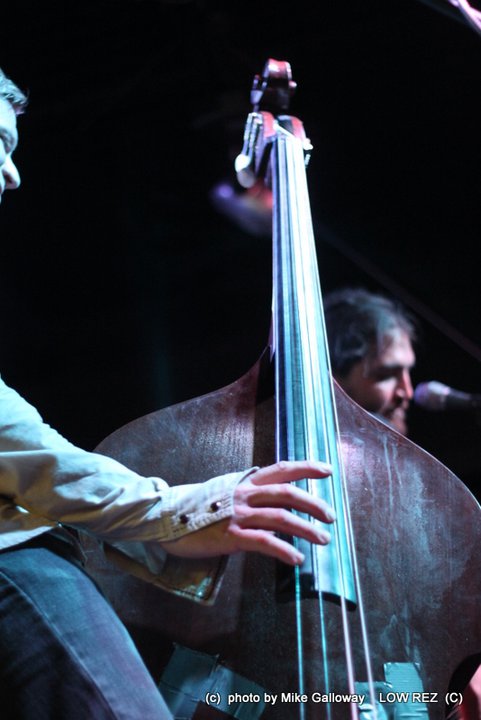
It is not easy to entertain a crowd four straight hours with nothing but acoustic guitar, bass, and a voice, but we did it.  We filled the dance floor every night, the upright slapping a train beat, the guitar strumming the rhythm, the voice pushing from one song to the next, the crowd singing along.  The other guy is not the best singer or guitar player, but he is the truest artist I ever met, and together we played better than ten guys.   His songs are as good as any of the paintings I see hanging in the shop windows downtown, and we painted them anew from scratch each night in a different bar, and split $400 plus tips for doing it.  Some months, those songs covered my bills when farming didn’t.

When it was time for my bass solo, he would put down his guitar and take a seat in front of the stage.  Sometimes the crowd of local drinkers would pull up chairs and join him, mostly machinists and pipe-fitters and welders who came straight to the bar after work in their blue Nomex coveralls, and then stayed all night drinking.  But usually the bar would go on as normal, the shouting and coarse jokes and pool games setting the background for the music.  I would play the Suites for Cello by Bach, composed as prayer, tapped out on the fret board of the electric bass, the long flowing phrases unwinding endlessly and perfectly through the cigarette smoke, and every single note was beautiful.

My friend would sit without moving and listen, and sometimes he was the only one who listened, his elbows on his knees, his head down, a bottle in his hand.  Occasionally he would take a long drink from the bottle.  After a year of this, every night, listening, he said he finally figured it out.  He said, “This is how you sing.”

He was sent to prison last week, a fifteen month stretch, assault with a deadly weapon.  Now there are only convicts and prison guards to listen to his songs, and the cold prison walls, but it doesn’t matter, because they don’t have music in jail, and we are both out of work.

My nights are suddenly free for the first time since I can remember.  I get restless around ten o’clock, kinetic, cagey, and my wife does not say anything as I put on my work gloves and go outside.  The last few nights have been a full moon, cloudless and brilliant, and I have been working past midnight, quietly repairing the henhouse around the sleeping chickens, building new pens as the pigs snore in the brush, walking the long rows of the gardens, and finally down on my hands and knees in the shadows, pulling weeds, leveling mulch, caressing the soft green leaves of plants like feathers in the silvery dark.

The music swells around me on the breeze, it comes now without me helping it, the vibration in the black soil gaining strength in my hands and knees, the flowing chords moving up and along the crops, the sonata rising above the lake, above the forest, all of it in bass notes, rising into the moonlight.

Moonlighting Sonata #2

Spring Gardening Series, Final Meeting this Saturday

Companion Planting Peppers in Carrots

Companion planting peppers with carrots

Friends, join us at Coastal Bend Health Foods this Saturday, May 5, from 11:00am to noon, for the last meeting of our Spring Gardening Series.  We will recap highlights of our gardening program and address any problems you may be having in your garden.  Also, we will provide you with the resources, literature, local authorities, and on-line support to enable you to continue to grow vegetables and herbs free of chemicals.

Our Methods Put to the Test this Season

This growing season, we have experienced endless challenges in our gardens.  Every caterpillar known to science has attacked our plants.  Gophers, cut ants, squirrels, raccoons, deer, grasshoppers, aphids, spider mites, stink bugs, on and on, every type of garden pest in this area, has been active in our crops.  We even had a tornado pass over the farm and play havoc with our corn stalks.  Worst of all, our spring weather only lasted a few days.  The oppressive heat of summer kicked in early this year to begin the slow burn on our gardens.

Methods that Work

Despite the relentless attacks on our gardens, we have hardly lost a plant this season.  For every problem we encountered, our program provided a solution–completely without the use of chemicals.

Lacewing hunting

In our gardening talks, we demonstrated the paramount importance of maintaining healthy soil.  Healthy soil, well mulched, watered appropriately, and fertilized effectively, is the best possible pesticide. When our gardens were attacked, the natural health of the plants resisted disease and bug damage, and gave us time to control for specific pests.  The lacewings and trichogamma wasps we seeded into the garden matured into voracious pest-eating machines.  Our native lizards, ladybugs, wasps, dragonflies, birds, frogs, toads, and other beneficial predators have been hard at work cleansing our gardens of pests.

I am convinced, now more than ever, that if we had used a chemical program, our gardens would have failed this spring.  First, we could not possibly afford to buy all the chemicals required to fight the problems we faced.  Second, I have been far too busy this growing season to apply chemicals, and still get all my work done.  And finally, even if the chemicals killed some of the bad bugs, they would also have killed the beneficial predators, diminished the soil health, and simply made matters worse.

We spent less time, less money, and less labor using our methods, than if we had used a chemical program.  And best of all, we are now enjoying a stunning harvest of the most healthy and delicious produce in town, completely free of chemicals.

Companion Planting for a Summer Harvest

Corn, beans, and squash seedsWe are currently harvesting yellow squash, dark green and striped zucchini, ripe red tomatoes, along with our carrots, kohl rabi, and collards.  We will soon begin to harvest beans, sweet and hot peppers, and eggplant, and a little later we will pick our sweet corn, winter squash, melons, and okra.

By inter-planting, or companion planting, our tomatoes, peppers, eggplant, and okra into shared space with our mature winter vegetables, we have been able to continue to harvest our carrots, collards, kolh rabi, and etc., throughout the summer, until they are sold out, and still provide summer produce.

Our Tres Hermanas (corn, beans, and squash) gardens are extremely prolific this year.  The Tres Hermanas gardens continue to increase in productivity with each successive planting.  The bean vines growing up the corn stalks stabilized them and held them in place when the tornado passed over.  Companion planting is the only reason our corn survived the direct 70 mph or greater winds from the tornado.

Recap of Program

This Saturday, we will provide a general recap and offer detailed resources around each of the following topics:

Focusing on Healthy Soil 

Growing Tomatoes in Rockport

Tres Hermanas and Other Companion Vegetables

Easy and Powerful Homemade Fertilizer 

Watering the Garden

Chemical-Free Pest Control:  Beneficial and Bad Predators

Mulching, Compost, and Native Resources

Bring your passion for gardening and your questions and suggestions and join us Saturday from 11:00am to noon!The Three Sisters

Easy and Amazing Homemade BBQ Sauce

BBQ Sauce Ingredients

Prep Time:  5 minutes. 

Cooking Time:  5 to 7 minutes. 

The first time my wife made her homemade BBQ sauce for me, it was an afterthought to our dinner.  I was on the porch grilling ribs and told her they would be ready in ten minutes, and she casually asked if I wanted BBQ sauce.  I assumed she meant generic store-bought sauce from the fridge.  Instead, she made, from scratch, the best BBQ sauce I ever tasted.

She finished the sauce in less than ten minutes in a pan on the stove, and spooned it over the ribs.  I couldn’t believe how good it was.  It was tangy and spicy and sweet with layers of rich flavors and so incredibly delicious.  At my request, she made the sauce for our friends, and everyone agreed it’s the best they ever tasted.  They asked her to make jars of it for them to take home.  My dad barters me power tools for it.

Why is this dish incredible?      It takes about 5 minutes to prepare the ingredients, and another 5 minutes to sauté.  Usually, if I see a new recipe with more than a few ingredients listed, I skip it.  However, this sauce is truly fast and simple.  I would never have believed homemade BBQ sauce was this easy, until I saw Kayla make it.  And I still think it is magic every time she does.

Friends, if you want to turn a grilling event into a romantic dinner, try this BBQ sauce recipe!  Tell your dinner date that you made this sweet and tangy sauce lovingly from scratch.  You will be golden for the night–trust me on this. 

Ingredients (Serves 4.  A little goes a long way; don’t drown the dish in this rich sauce.  We offer it to guests in little bowls next to the grilled meat and they can take more if they want.  You may double the recipe, and save the left-overs in a jar in the fridge. )

  • 2 tbs olive oil
  • 1 clove garlic, minced (2 cloves for garlic lovers)
  • ½ medium sweet onion, finely diced
  • pinch of salt (to sweat the aromatics)
  • 1 cup ketchup
  • 1 tbs light brown sugar
  • coarsely ground black pepper, to taste
  • 1/8 tsp red pepper flakes (more for spicier sauce)
  • ½ tsp Dijon mustard
  • 1 tsp Worcestershire sauce
  • 1 tsp soy sauce

To prepare:  Heat olive oil in a sauté pan over medium heat.  Add onions and a pinch of salt and sauté until translucent and they begin to caramelize.  Stir in garlic and cook about 30 seconds, until the garlic just becomes fragrant.  Reduce heat to low and stir in all the remaining ingredients.  Simmer on low heat and continue to stir and let mixture bubble until it thickens to desired consistency.

More about this recipe:  When I asked Kayla to write down this recipe, she had some difficulty.  She learned to cook this dish from her grandmother, who learned it from her mom.  Kayla had never measured the ingredients, or thought about heat or cooking time.  She simply knew from experience how much of which ingredients to add as she went along.  Kayla uses sight, sound, and smell, to know when things are ready, and continually tastes her creations and adjusts as she goes along.  For someone like me, who relies heavily on recipes, using only my senses is unfamiliar territory.

She measured her ingredients over several occasions preparing this BBQ sauce, to get it just right.  However, you should use your senses to adjust the sauce to your taste.  If you like it hotter, add more pepper flakes; if you like it sweeter, add more brown sugar.  Please feel confident to trust your senses and personalize this recipe to make it your best ever homemade BBQ sauce.

Spring Gardening Series: Ideas for a Chemical-Free Garden

Friends, we are pleased to announce that Four String Farm will host a series of gardening discussions, “Ideas for a Chemical-Free Garden”, at Coastal Bend Health Foods this spring.  Join us on the first and third Saturdays in March and April from 11:00am to noon, for a fun and interesting exploration of chemical-free gardening.

The first session is this Saturday, March 3rd, from 11:00am to noon.  There is no charge and all current and future gardeners are welcome.  Bring your passion for healthy and delicious food and a desire to grow a beautiful, chemical-free garden.

Saturday, March 3rdPreparing the Soil and Getting Ready to Plant

Saturday, March 17thGrowing Tomatoes in Rockport.  How to Grow Tres Hermanas.

April:  Easy and Powerful Homemade Fertilizer.  Watering the Garden.  Chemical-Free Pest Control.  Beneficial and Bad Predators.  Maximizing Native Resources.  Potent Compost.  Efficient Harvesting.  Preparing for Fall Companion Planting.

Experience not Required

If you do not know the first thing about growing vegetables, do not be worried; I have been where you are.  I was not raised in a farming family and probably never saw a vegetable planted during my entire childhood.  I didn’t even have a cactus in my dorm window in college!

However, I am profoundly grateful that I had no early influences on my farming.  I was never schooled in a particular method and consequently locked into a flawed model through habit or fear of change.

On the contrary, I have been privileged to study farming methods in many diverse places, particularly in developing countries, where the failure of a garden means starvation for the families that depend upon it for survival.  The stakes are very high for these farmers and they can’t afford to miss.

In the upper Himalayas, the growing season is only five months of the year.  The tiny terraced gardens carved into the cold mountain must produce all the food for the community for the whole year.  And they are vegetarians!  A single failed harvest brings devastating consequences.  Those folks do not use chemicals in their gardens.  In the tiny islands of Japan, every tillable square inch of land is under cultivation, right up to the roads, sidewalks, sides of buildings, even the tops of buildings.  Japanese farmers, for the most part, use traditional methods and shun chemicals.  I visited a farm in California where the “beneficial predator garden” was nearly as big as the vegetable garden.  They raised enough good bugs to eat the bad bugs so they never needed to spray chemicals!  On little farms across America, innovative farmers are developing highly successful programs free of chemicals.  I have been blessed to learn from many good teachers.

Sometimes the best innovation is simply re-discovering old methods.  I found the Tres Hernamas companion planting method in a history book about early American pioneers.  However, I could not find anything about this method in gardening books, on the internet, or from local experts, despite the fact that Tres Hermanas was the dominant method of growing food in America for over 1,000 years.  Native American Indians and pioneer settlers survived on these gardens without any chemicals whatsoever.

Today, corn, beans, and squash are a significant portion of our farm income and the Tres Hermanas method is an indispensable part of our overall program.  We are professional farmers; we make our living with our gardens and animals.  Like the Indians who developed Tres Hermanas, we cannot afford to miss.  Our methods must work.

The Pastured Method of Agriculture

On our farm, we employ the “pastured method” for growing food.  Our animals and gardens work together to create incredibly healthy and flavorful food.  We employ our native resources and a little ingenuity and a very few store-bought items.  We never use chemicals on our gardens.  We do use a chemical for one specific case on our farm (the dreaded cut ant) and never apply it close to animals or plants, and we will talk about this.

To my knowledge, my friend Greg Edelen of Edelen Farms, 100 miles away, is the only other farmer in South Texas who uses a pastured method of agriculture.  I would love to see more farmers adopt this method!  Pastured farming requires less money, less labor, and less time than chemical agriculture.  It is easier on the animals and actually improves the environment.  The gardens are more vital, more nutrient rich, and more prolific.  The health properties of pastured food far surpass chemical-soaked produce.  And the taste of pastured food is beyond comparison.

My challenge has been to translate the elements of a pastured program into methods that home gardeners, who are not able to keep animals, can implement.  We will explore those concepts at our discussions and will learn from your ideas as well.

Don’t Bash the Chemical Guys!

There are many gardening classes and lectures in our area open to the public.  However, most of those programs are based on the chemical model of growing food.  Some of the classes seem more like chemistry than gardening.

If you use chemicals, you will not get a hard time in our discussions.  Many of our farm customers are local master gardeners who use chemicals, and some have been out to our farm to observe our methods in detail.  The owner of a large chemical fertilizer company sits down the pew from me in church, and is the nicest guy you will ever meet.  It is not in my nature to make anyone feel uncomfortable.  Our goal is simply to create a forum to share ideas about growing vegetables without chemicals.

I believe the chemical model of growing food does not work.  Chemicals usually kill gardens gradually, and sometimes all at once.  And besides, who wants to eat vegetables that come out of a chemical garden, if you can grow them in a natural way?  When home gardeners use chemicals, they benefit the chemical companies more than their gardens.

“If I Knew a Better Way, I Would Do It!”

A home gardener recently told me that every time she fills her cart with Round-Up and Miracle-Gro and other chemicals, she can’t help feeling a little uneasy.  She assumes the products are safe, or they wouldn’t sell them at the store, right?  But she wants to raise her own food, and if she knew a better method, she would use it.

Friends, our “Spring Gardening Series:  Ideas for a Chemical Free Garden” will show that there are chemical-free methods to grow food that work better, are safer, healthier, and taste better!  Stop by Coastal Bend Health Foods on the first and third Saturdays during March, April, and May, from 11:00am to noon, to find out more.

I Love Your Laugh

You laugh as the table is cleared away and

we sit talking with the others.

You laugh, a little at first as you set down your glass,

then your head back to great unselfconscious

laughter, mouth open, smiling, eyes closed,

and your head goes back again to laugh.

I see all at once you and

the little girl you were in yellow curls

the woman tonight with hair of fire

the lady you will become

long hair flowing gray and up in a loose bun.

All of you laugh together and it is like

the surf that pulses the shore across the balcony and

rolls into crashing white spray

and rises up in the clear night

and falls again as drops of rain

at the top of a tall mountain

and trickles back down to the forest

where a boy who already unknowingly loves you

stands at the edge of the laughter

and enters and climbs all the way to the man

tonight who measures his breath

on your fingers around his hand

that you squeeze gently as you talk

and keeps climbing into the old man who will stoop down

as you laugh in the room of a lived-in house

and kiss the back of your neck beneath the gray bun,

and has already loved you his whole life.

………………………………………………………

I don’t talk much during the dinner

but smile and nod and someone asks

if I am sleepy though I am not and

you say you have to get me home

and outside you say, What?

and you smile and pull my hand and say

Why are you looking at me like that?

and I can only think to say,

I love your laugh.

Super Bowl Champion Thai Lettuce Wraps

Thai Lettuce Wraps Ingredients

Although we prepared several wonderful dishes on Super Bowl Sunday, the absolute champion was Kayla’s Thai Lettuce Wraps.

She decided to make Thai Lettuce Wraps only after taking inventory of the ingredients I brought into the house and set on the table:  freshly picked bibb and red salad and buttercrunch lettuce, baby cabbage leaves, new carrots from the garden, fresh ginger root, cilantro, ground pork, and etc.  (All of these ingredients are available freshly picked every day at Coastal Bend Health Foods.)

For someone like me, who relies heavily on recipes, it is endlessly fascinating to watch a clever chef create delicious recipes from scratch, based on the ingredients at hand.  As a dietician, Kayla has a knack for creating dishes that are also healthy and nutritious.

Once I started eating the lettuce wraps, I could not put them down.  Our other dishes–baked potatoes stuffed with bacon, chives, and cheese; Four String sausage dogs topped with grilled onions and English mustard on homemade buns; collard greens; and more—went into the fridge to make hearty farm lunches during the dreary post-football season week.

So, while we salute Eli and the New York Giants, the real Super Bowl Champion was the Thai Lettuce Wraps!

Why this recipe is excellent:  This dish is extremely fresh; every bite is a crunchy taste of vegetable goodness.  The pork filling is spicy and flavorful with an Asian flare.  The wraps are not messy—the long freshly picked lettuce leaf is the perfect wrapper for the pork filling.  This dish is extremely healthy; you can go back for guilt-free seconds.  If you are eating this dish with a group, get all the wraps you want up front, because there may be none on the second pass.

(Serves 4, or apparently 1 if you are Justin)

Ingredients:

Pork filling

2 tbsp sesame seed oil

½ onion, chopped

1 jalapeno, mostly seeded, finely minced

1 lb ground pork

Red pepper flakes, to taste

Pinch of salt

2 garlic cloves, minced

1 heaping tbsp fresh ginger, finely grated

Shitake mushrooms, thinly sliced

6 or so tbsp low-sodium soy sauce

1 generous splash mirin (rice wine)

1 splash rice wine vinegar

1 tbsp packed brown sugar

Juice of 1 lime

Wrap and Toppings

12 large lettuce leaves, rinsed well and dried (Recommended: Bibb)

5 baby carrots, finely julienned

Cabbage, finely shredded

Cilantro

To prepare:  Heat oil in a pan on medium heat.  Add onion and jalapeno, sautéing until tender. Add ground pork, salt and red pepper.  When pork is almost completely browned, add garlic, ginger, and mushrooms, cooking for an additional minute until fragrant.  Stir in liquids and brown sugar.  Increase heat to high and cook until liquids reach a rolling boil. Remove from heat.  Finish with squeezed lime.

To assemble wraps, place pork filling, carrot, cabbage and cilantro on a large lettuce leaf.  Fold leaf around filling or roll like a burrito to prevent filling from coming out.  Enjoy.

A Pretty Good Proposal

I took her to climb my favorite mountain in the world.  We drove 12 straight hours to get there, singing all the way to Kings of Leon and Waylon Jennings, and parked at the end of a washed-out gravel road.

She was ahead of me into the rocks, past boulders bigger than a house, past the Indian cave paintings, back and forth along the switchbacks, always ascending, steady under her pack.  We crossed an alpine meadow with yellow grass and on the far side a line of white-trunked birch trees, and after the birch trees vistas opened to the heat-shimmering desert below.

The last part of that mountain is a hand over hand climb up the steep northern slope.  We pulled ourselves to the very top and the cold wind washed over us and the sun poured down and the limitless world stretched green and gold in all directions beneath a hazy blue.

I was as nervous as I’ve ever been, and told her my ruse:  that hidden somewhere on this peak is a small white container with a sign-in sheet, and it has the signatures of everyone who had ever climbed the mountain, and did she want to sign it?

She searched the peak, hardly bigger than a kitchen floor, turning over the rocks and long flat stones.  Finally she found it, deep in a crevice, the dusty old PVC pipe case I had made and buried there.  She took the cap off, and there was not a sign-in sheet, but a note, in my handwriting, that said,

Marry me, Kayla, you, the other half of my heart

She looked up from the note with the white sun blindingly behind her, and I was down on one knee with the ring, and she said yes, yes, yes.

That night, after a supper of antelope jerky and dried dates and homemade bread with wild grape jelly, we lay down under a soft thin blanket. The full moon shined above the mountains like a lantern.  She nestled closer into my shoulder and asked if I would have thrown her off the mountain, if she had said, No?