Filing Taxes in Ancient Egypt

In Ancient Egypt, the Nile Delta was a floodplain.  Every year, the waters of the Nile rose far above the banks and deposited silt and sediment across the golden plains.  Then the waters would recede and leave extraordinarily fertile soil for Egyptian farmers to plant.

The Nile Delta of Ancient Egypt

The Nile Delta of Ancient Egypt

Herodotus, the celebrated historian of the 5th Century BC, tells us in his Histories that farmers have never had it so easy as the Egyptians of the Nile Delta.

He said that once the floodwaters receded, farmers would simply walk into their fields and broadcast their seeds by hand, and then turn pigs loose to trample the seeds into the soil.  The farmers then took away the pigs and returned in three months to harvest an amazing bounty of barley, beans, lentils, fruits, and vegetables.

The Nile Delta transformed Egypt into an empire, and the surplus of the farms fueled the work of the pyramids, the armies who conquered the desert, and the coffers of the mighty pharos.

Herodotus tells us that King Sesotris, one of the great pharaohs, divided the land of the Nile Delta into large squares of equal size and gave one square to each family to farm.  He then taxed all of the farms equally.

However, each year, the river rose and receded to different levels, causing some parts of the squares to go out of cultivation.  King Sesotris allowed farmers to file a tax return based on the amount of their land that had fallen out of production.

Unfortunately, the math to compute surface area did not yet exist, and the tax collectors were not able to calculate the unequal and odd shapes of farmland submitted for tax returns.  According to Herodotus, this is how geometry was invented; to help King Sesotris evaluate the tax returns of his farmers.

Euclid, the father of geometry, came along much later, and he set his axioms to geometric law long after the writings of Herodotus and the reign of the pharaohs.

But if you were a farmer in the Nile Delta, you could be sure that the IRS agents of the king, armed with their new invention of geometry, could assess your taxes with unprecedented accuracy, and not a bean nor a barley seed would be missed.

Ancient Egyptian Farmer's Calendar.   Wall mural showing land preparation, ploughing, reaping, winnowing, grain storage (image courtesy biblearcheaology.info)

Ancient Egyptian Farmer’s Calendar.
Wall mural showing land preparation, ploughing, reaping, winnowing, grain storage (image courtesy biblearcheaology.info)

Four String Chicks Available at Moore than Feed

Emma with cornish rock chick 4-13-14

Friends, stop by Moore than Feed in Rockport to get your very own baby chicks.  Moore than Feed now sells chicks that came straight from our farm.  When your chicks grow up, their beautiful eggs will be blue, green, pink, white, light brown, or dark brown.

We collected the eggs from our own laying hens, and our friends Fred and Linda Marshall, of M-Tree Quail Farm, incubated the eggs for us into healthy happy chicks.

These chicks are the fourth or fifth generation of chickens born on our farm.  We have been incubating our own eggs to develop laying hens that are more tolerant of the intense heat of a Rockport summer.  We have also selected for the most beautiful roosters and hens, and every new generation is more beautiful than the last.

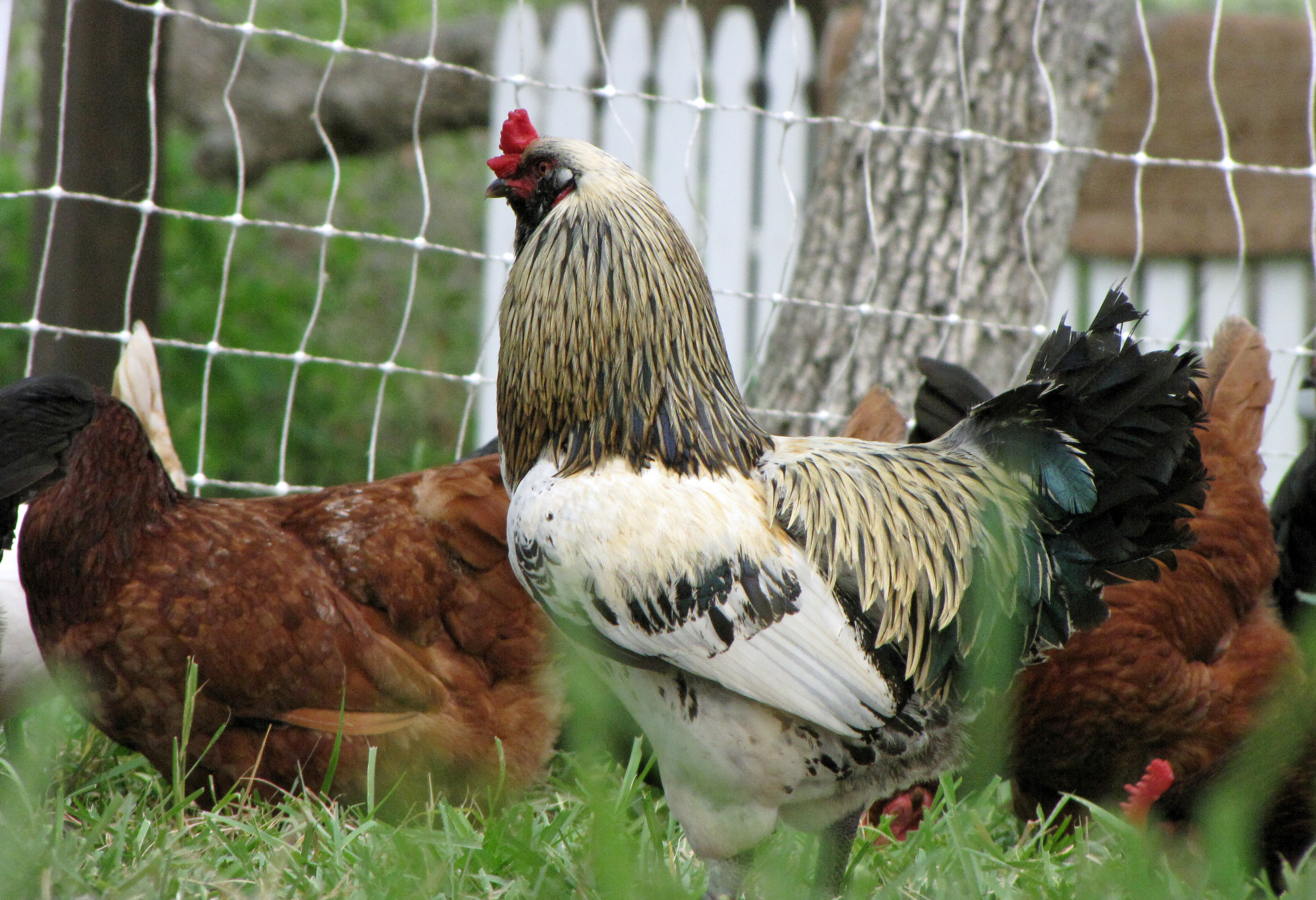
A Good Ameraucana Rooster

A Good Ameraucana Rooster

The chicks at Moore than Feed are straight run and mixed.  The breeds of chicks available include:  barnevelders, cuckoo marans, ameraucanas, black langshans, black australorps, production reds, white leghorns, dominiques, and barred rocks.  Melvin and his team will help you select your chicks.

Melvin also offers everything you need to start your own backyard laying hens, from feeders to hen houses.  Begin now with your own chicks, and soon you will enjoy your own beautiful eggs, freshly gathered, and your laying hens will be lovely to look at.

Emma with Cornish rock looking 4-13-14

The Floating Gardens of the Aztecs

When Cortez discovered the Aztec Empire in the year 1519, he found 200,000 people living on an island in the middle of a lake.  Tenochtitlan, now Mexico City, was the biggest and best-fed city in the world, and this fortress city was completely surrounded by water.

To feed their enormous population, the Aztecs ingeniously built chinampas, or floating gardens, to convert the marshy wetlands of Lake Texcoco into arable farmland.  These floating gardens were a masterpiece of engineering.

Each garden was 300 feet long by 30 feet wide.  To make a garden, workers weaved sticks together to form a giant raft, and then then piled mud from the bottom of the lake on top of the raft to create a layer of soil three feet thick.

The rectangular gardens were anchored to the lake by willow trees planted at the corners.  Each garden was lined on all sides by canals to allow canoes to pass with workers and materials.  This network of gardens extended for 22,000 acres across the surface of the lake.

The floating gardens were companion planted with corn, beans, squash, tomatoes, peppers, and flowers, and these incredible gardens yielded seven crops per year.

(Image courtesy anthropogen.com)

(Image courtesy anthropogen.com)

The Aztec religion was a cult of sacrifice, and the gods were fearsome.  The victims of sacrifice, standing on top of the great pyramid, could see the floating green gardens in the far distance, with the sun sparkling on the lake, and then their hearts were cut out and roasted in a fire.

Tens of thousands of heads rolled down the stone steps of those pyramids, and the rivers that turned the temples red in the noonday sun were a plea to the gods to keep the gardens growing.  But in the end, when the sky went dark over Tenochtitlan, and the earth shook beneath the feet of Montezuma, it was not the sun god who brought judgment; it was the Conquistadors.

The Spaniards’ military advantages over the Aztecs—the swords, guns, and horses–were nullified in the sanctuary of the floating gardens, and Cortez was covetous of gold, not Indian corn, so he ordered the destruction of the chinampas.

The floating gardens of the Aztecs, the key to their great civilization, were torn to pieces by the hands that built them, and thrown to the bottom of the lake, never to rise again.

The Ruins of a Civilization (image courtesy jupiterimages/photos.com/gettyimages)

The Ruins of a Civilization (image courtesy jupiterimages/photos.com/gettyimages)

Plowing Pictures, After

Kayla Garden Hat

I got these pictures of Kayla after Emma came.

Kayla is working for most of the day in the gardens now, and while she works she keeps Emma in a papoose that our friend Kimmi gave us.

On the very best of days, this is what farming looks like to me.

Kayla with Emma in ErgoKayla Emma Bando 3-25-14Kayla Flowers to Left 3-20-14Kayla Emma Bright Trees in back 3-20-14

Kayla working in garden a month after baby

Kayla working in garden a month after baby

Emma spends the time out of her papoose in a stroller at the edge of the garden.

Emma spends the time out of her papoose in a stroller at the edge of the garden.


Emma Crying with Kayla 3-20-14Kayla Emma Red Nails 3-20-14

Baby Emma, two-and-a-half months

Baby Emma, two-and-a-half months

Plowing Pictures, Before

Kayla Shaping Rows holding rake

I got these pictures of Kayla when she was ten months along.  These are the last pictures I have of her before Emma came, a couple days later.

Kayla was helping me plow up this garden.  I did most of the plowing, but she was out there with me helping where she could.

On the best of days, this is what farming looks like to me.

Kayla Shaping Rows with baby

We moved the chickens off this garden the day before.

We moved the chickens off this garden the day before.

We use the tractor to make straight rows to guide our planting.

We use the tractor to make straight rows to guide our planting.

Justin Behind Tractor

Kayla Shaping Rows smiling

Kayla Shaping Rows profile

Kayla Shaping Rows hawk

Watering the Garden

Kayla watering newly seeded garden bed, five feet wide.  She is standing in between beds on leaf mulch pile that we will place on the bed after the seeds sprout.

Kayla watering newly seeded garden bed, five feet wide. She is standing in between beds on leaf mulch pile that we will place on the bed after the seeds sprout.

In South Texas, we can go for weeks, or even months, without a single good rain.  To survive, your plants depend entirely upon you for their water, and it helps to know how much and how often to water your garden.

The water needs of a garden can vary greatly in the extreme weather conditions of South Texas.  The key to knowing when to water is to check the soil.

Ideally, the top five or six inches of soil should remain moist at all times.  This top layer of soil is where most of the healthy bacteria and micro-organisms live, and they require even moisture to thrive.

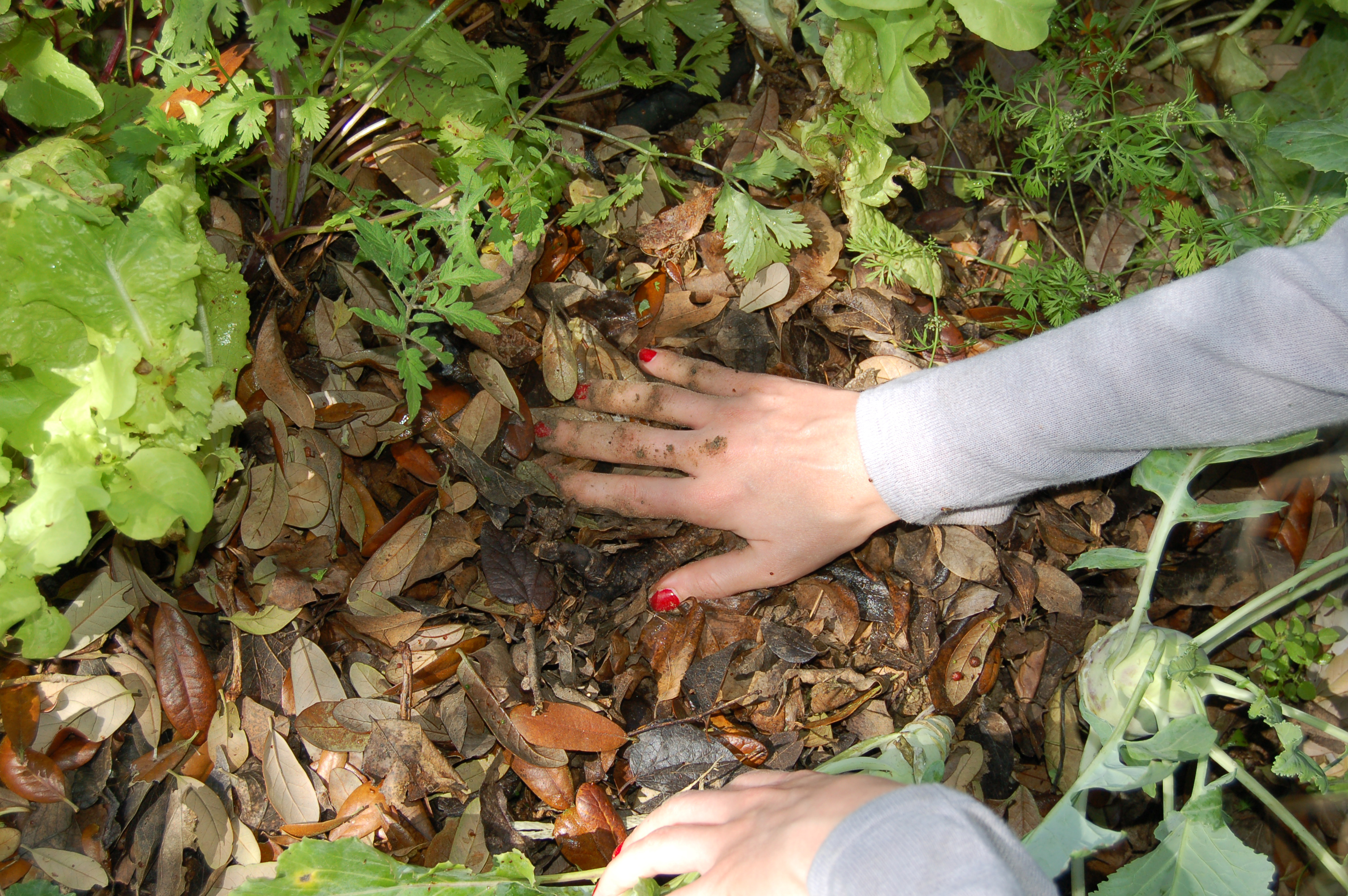
The garden dries out from the top layer of soil on down.  Use your finger to dig into the garden bed to check the amount and depth of moisture around the plants (see pictures below).

When it is time, water the soil slightly deeper than the lowest level of the roots.  Watering past this point is simply wasting water.  Let the soil mostly, but not completely, dry out, before watering again.  This deep and infrequent watering promotes vigorous root growth by forcing the roots to reach into the soil seeking water.

It is best to water the soil, not the plants.  In fact, most plants, like tomatoes, don’t like water on their leaves, which causes the leaves to turn yellow and wilt.  Use the rain setting of your garden hose to drench the soil at the base of your plants, but not the plants themselves.

If possible, water the garden in the evening.  Plants do a lot of their growing at night, and they need plenty of moisture in the soil to optimize their nighttime cellular functions.  If you water during the morning, or even worse, at mid-day, you will lose a lot of water to evaporation and leave the soil dry during the night.

To prevent the soil from quickly drying out, add a thick, insulating layer of native leaf mulch around your plants.  A thick layer of native leaf mulch can reduce the water needs of your garden by up to fifty percent.

As you dig into the soil to check the level of moisture, carefully observe the plants in your garden.  You will quickly see the relationship between the health and appearance of your plants and the level of moisture in the soil.  Your soil will tell you exactly how much, and how often, to water your garden.

Checking Soil Moisture, Step 1:  Companion Bed with tomato transplant center left, cilantro far left, lettuce lower left, kolh rabi to right.  Live oak leaf mulch.

Checking Soil Moisture, Step 1: Companion Bed with tomato transplant center left, cilantro far left, lettuce lower left, kolh rabi to right. Live oak leaf mulch.

Step 2:  Dig finger 5 to 6 inches into bed to check amount and depth of soil moisture.

Step 2: Dig finger 5 to 6 inches into bed to check amount and depth of soil moisture.

Step 3:  This is day after a good soaking rain, soil is still wet--holds shape in a clump.  No need to water today.  You do not need to remove soil from the hole to check moisture, this handful of soil is for illustration only.

Step 3: This is day after a good soaking rain, soil is still wet–holds shape in a clump. No need to water today. You do not need to remove soil from the hole to check moisture, this handful of soil is for illustration only.

Step 4:  Gently replace any soil and re-cover with native leaf mulch.

Step 4: Gently replace any soil and re-cover with native leaf mulch.

The Waggle Dance

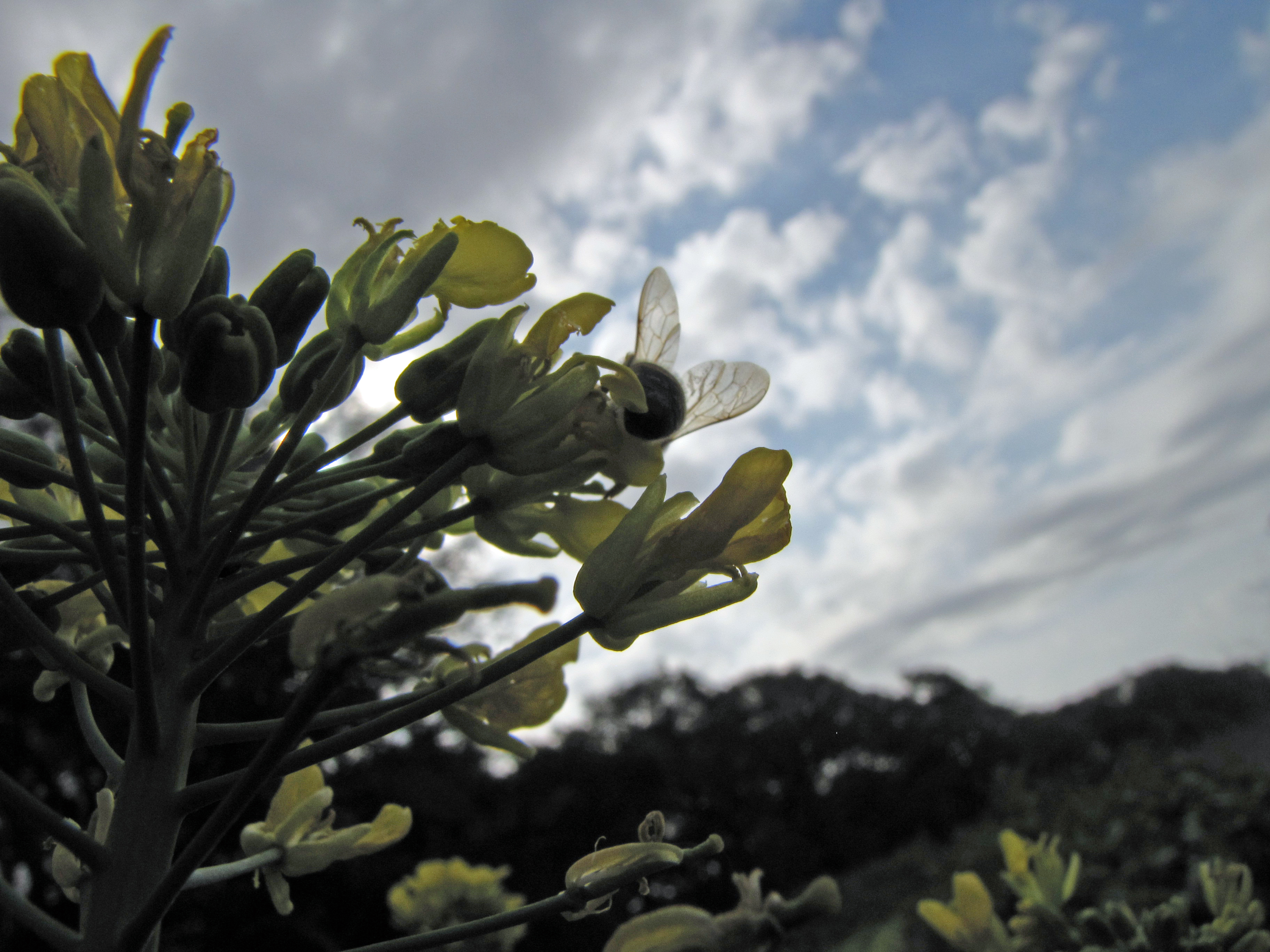
Bee on a Broccoli Flower

Bee on a Broccoli Flower

When a honeybee scout, out on patrol, finds a new source of nectar, she flies back to the hive to tell the other bees all about it.  To communicate the exact location of the nectar source, the scout bee performs the waggle dance.

In the waggle dance, the scout bee literally dances across the vertical comb of the hive in a distinct pattern.  During the straight line of her dance, called the waggle run, she shakes her tail vigorously to a certain rhythm.

At the end of the waggle run, she turns left, circles back to the beginning, and repeats the dance.  The next time she turns to the right, circles back, and then repeats this fascinating figure eight pattern.  The bees of the hive surround her and watch intently.

The number of waggles she makes with her tail indicates the precise distance to the nectar source.  This communication of distance through waggling is amazingly accurate, almost to the inch, even when the nectar source is half a mile away.

To show direction, the line of the waggle run points exactly toward the nectar source, relative to the sun.  Bees use the sun to navigate, which is why you never see bees out on an overcast day.  The waggle dance creates a precise angle between the sun, the hive, and the nectar source, for the bees to follow.  As the day progresses, and the sun moves through the sky, the bee changes the angle of her waggle dance to accommodate the changing position of the sun.

The bees watching the waggle dance, when they are clear on distance and direction, order the dancing bee to stop, for a brief moment, so they can sample the nectar on her mouth to know which flower they are seeking.  All the bees involved in this process are females, since the only job for a male bee is to attend to the queen.

When the bees leave the hive, they fly in a straight line to the nectar source on a path called the beeline.  The bees fly back and forth on this beeline, harvesting nectar and taking it to the hive, until a new waggle dance points them to a new source of nectar.

During the winter, in our area, one of the chief nectar sources for honeybees is the miniscule flower heads in coastal Bermuda grass.  Right now, bees are seeking nectar from the blooms of huisache trees and spring flowers.  Soon, bees will look for the flowers of mesquite trees, which is a primary source of nectar for the honeybees of South Texas.

To bring honeybees to your garden, plant flowers generously among your vegetables–nasturtiums, marigolds, sunflowers, and blue borage.  Bees love the blooms of herbal flowers; plant basil, dill, and cilantro among your vegetables and let them go to flower.  Your flowers may inspire a waggle dance on a hive near you, pointed directly at your garden.

More Techniques for Growing Tomatoes

Two More Weeks of TomatoesIf you would like your own ripe, red tomatoes this summer, freshly-picked from your garden, the time to plant them is now.

In addition to companion planting, and growing in healthy soil, look for tomato varieties that will thrive in the brutal heat of a South Texas summer.

Tomato Varieties

Look for tomato varieties that 1) mature quickly, and 2) are tolerant of high heat.  In South Texas, we go from freezing cold to burning hot very quickly.  Tomatoes will not set fruit if the night-time soil temperature is below 55 degrees, or above 70 degrees.   So, we need to make the most of the warming period between winter and summer to grow tomatoes.

Plant Early Girl, Cherry Sweet and Cherry 100, and Juliette; these will mature within 50 days and begin delivering tomatoes very quickly.  Also plant heat-tolerant varieties, such as Solar Fire, Heatmaster, and Heatwave.  These varieties produce when nighttime soil temperature is slightly above 70 degrees, and allow you to get tomatoes even when the weather gets very hot.

Rooting Down the Stem

Bury the tomato transplant deeply, about 2/3rds of the way into the ground.  Each of the tiny hairs down the stem is a potential root, and planting the tomato deeply helps maximize the root strength of the plant.  The more vigorous the root system, the more prolific the plant will be.

Homemade Wood Ash and Crushed Oyster Shells

Before you bury the transplant, throw a handful of homemade wood ash, and another handful of crushed oyster shells, into the bottom of the hole.

Wood ash is rich in potassium, and potassium helps unlock the sugar molecules in tomatoes.  Homemade wood ash is the absolute secret weapon for growing the sweetest, most flavorful tomatoes.  But use only wood ash from native trees; pecan, live oak, or mesquite.

Crushed oyster shells are rich in calcium; they help prevent blossom end rot in tomatoes, which is a common problem in South Texas gardens.  After you bury the transplant, sprinkle another generous handful of wood ash and crushed oyster shells around the base of each tomato plant.

Crushed Oyster Shells and Homemade Wood Ash should touch roots

Crushed Oyster Shells and Homemade Wood Ash should touch roots

Corn Meal for Disease Control

Next, dust the plants with stone ground corn meal to prevent the fungal diseases that cause yellow or black spots on tomato leaves.  Corn meal stimulates the natural microorganisms that eat and destroy fungal diseases.  Grocery store corn meal won’t work on your plants because it’s too highly processed.  Look for horticultural corn meal from a feed store or nursery.

Adding Live Oak Leaf Mulch

Adding Live Oak Leaf Mulch

Native Leaf Mulch

Mulch your tomato plants thickly with native leaf mulch.  Use leaves from live oak, pecan, or even mesquite trees, whatever you can easily rake up in your neighborhood.  As the weather turns hotter, continue to add native leaf mulch until it is twelve inches thick over your plants.  This ultra-thick layer of leaf mulch will keep the soil cool and moist, and keep your tomatoes producing even in the hottest weather.

Increasing Yields and Flavor

The average tomato plant yields about 5 to 20 pounds of tomatoes during a season.  However, by using these ancient, inexpensive, and highly effective techniques, you can produce 50 pounds or more of delicious tomatoes from each of the plants in your garden.

Planting the Three Sisters

Kayla with Harvest in a Three Sisters Garden

Kayla with Harvest in a Three Sisters Garden

If you are ready to start your own garden, but aren’t sure where to begin, you might consider the Three Sisters method of planting.  Now is the perfect time.

The Three Sisters is the Native American technique of inter-planting corn, beans, and squash.  This method is an easy and sustainable way to grow a great deal of food on a very small space with minimal work or expense.

In a Three Sisters garden, the corn grows thick and tall.  The bean vines climb the corn stalks as a trellis.  Squash plants cover the soil as living green mulch.  The plants don’t crowd one other.  They actually grow better when planted together, than when planted separately.

Purple Bean Flowers on a Corn Stalk Trellis

Purple Bean Flowers on a Corn Stalk Trellis

Native American Indians grew a tremendous amount of food in these gardens without the use of a plow, and without any chemicals whatsoever.  They used the same tools as a modern backyard gardener.

The Aztecs fed a crowded city of 200,000 people from their Three Sisters gardens.  Tenochtitlan (now Mexico City) was an island city on a lake when Cortez discovered the Aztec Empire in 1519.  Between 60,000 and 100,000 people shopped the downtown farmers’ markets each week, with the vegetables carted down from thousands of small Three Sisters gardens ringing the city.  Tenochtitlan was possibly the largest, most complex, and best-fed city in the world, rivaled only by Paris, when the Spaniards seized possession of it.

Pocahontas saved the colony at Jamestown by sending them corn, beans, and squash.  When Captain Smith left the colony, she taught the technique to her new husband, John Rolfe, and he became the first great plantation owner in America.  Pocahontas taught John Rolfe the secrets of Three Sisters agriculture, and also showed him how to grow and cure tobacco.  Tobacco became the chief cash crop from the New World to the Old, and Three Sisters gardens fed the army of workers required to produce it.

Squanto taught this method to the Pilgrims.  Three Sisters agriculture helped establish the colony at Plymouth Rock.  In fact, the first Thanksgiving was celebrated with corn, beans, and squash.  Following that first Thanksgiving, Governor Bradford gave each family their own plot of land, rather than all families cultivating a communal plot, as in Europe.  Each family was free to grow their own Three Sisters gardens and to sell or trade their surplus.

The Mayflower Compact is considered to be the origins of democracy in America, and this act to privatize farming in Plymouth Rock is the birthplace of American capitalism.  For the next 50 years, corn, beans, and squash constituted up to 70% or more of Pilgrims’ diet, and the trade of surplus produce allowed them build their practical wealth in the New World.  Plymouth Rock, in a sense, was built on Three Sisters gardens.

Even a tiny three foot by three foot garden will produce with this method.   Plant the corn and beans seeds on the corners of a 12 inch square, and plant the squash seeds along each straight line.  This is a perfect starter garden for children.

To plant a one hundred square foot garden, prepare three garden rows, each ten feet long.  Plant the corn and bean seeds together down each row, 12 inches apart.  Plant the squash seeds in between these pairs, 24 inches apart.  This little garden can produce 60 ears of sweet corn, 30 pounds of beans, and over 150 pounds of summer and winter squash.  You can even grow melons, pumpkins, cucumbers, herbs and flowers in this garden.

Black Diamond Watermelons at Edge of a Three Sisters Garden; Bean Vines on Corn Stalk on Left

Black Diamond Watermelons at Edge of a Three Sisters Garden; Bean Vines on Corn Stalk on Left

The Three Sisters were cultivated extensively across America until the early 1900’s, when industrial farm equipment replaced small-scale farmers.  Vast chemical monocultures soon dominated the landscape, and the old ways of farming were forgotten.

The Three Sisters method is possibly the best-kept gardening secret in America, but you can use this method to pioneer your own space.  The Three Sisters will happily make themselves at home in your garden.

kayla-beans-corn-trellis.jpg

The Bird Lady of Corpus Christi

Audubon Classroom at the South Texas Botanical Gardens

Audubon Classroom at the South Texas Botanical Gardens

Last month, Kayla and I attended a meeting of the Coastal Bend Audubon Society, and I led a discussion about bees.

The Audubon Society graciously welcomed me and Kayla, and even baby Emma, who was exactly a month old.  They are such a wonderful and interesting group, I wanted to share information about their next meeting, this Tuesday, March 4, at 7:00pm, at the Botanical Gardens of South Texas.

At this meeting, Cord Eversol, of Texas A&M–Kingsville, will be talking about alligators.  All are welcome for this presentation, stop by if you are able.

Africanization of Bees

During our presentation, one of the topics we discussed was the Africanization of bees.  In the 1980’s, an African bee colony was surreptitiously introduced to South America, and these hearty bees began to replace the European colonies of bees going north all the way to Texas, and now throughout the United States.  It is possible that the honeybee population of North America will eventually become Africanized.

Bee with Head in Broccoli Flower

Bee with Head in Broccoli Flower

Bees in America before European Discovery

I noted in the presentation that the Pilgrims brought several colonies of European bees with them on the Mayflower.  They did not know whether bees existed in the New World, so they brought their own to make sure their plants were pollinated, and to harvest their own honey.  Spanish Conquistadores likewise brought European honeybees to Mexico and South America, and Portuguese settlers to Brazil.  These European bees spread throughout the continent.  (I am indebted to Terry Carter, our leading beekeeper in Rockport, and maker of Rockport Local Honey, who shared a great deal of excellent information with me about bees for the presentation.)

The question was asked during the presentation whether honeybees existed in America prior to European settlement.  I did not know the answer, but have since found the following information in Notes on the State of Virginia by Thomas Jefferson:

The honey-bee is not a native of our continent.  Marcgrave indeed mentions a species of honey-bee in Brasil.  But this has no sting, and is therefore different from the one we have, which resembles perfectly that of Europe.  The Indians concur with us in the tradition that it was brought from Europe; but when, and by whom, we know not.  [Jefferson was not familiar with the cargo manifest of the Mayflower, because those notes were still kept in England, and England and America were at war at the time of his writing.]  The bees have extended themselves into the country, a little in advance of the white settlers.  The Indians therefore call them the white man’s fly, and consider their approach as indicating the approach of the settlement of the whites.

In modern times, bees are the chief pollinators of plants.  Before European settlement, 0ther pollinators must have performed the mighty work of perpetuating plant life in America.  If anyone knows which were the chief pollinators before the arrival of Europeans, I would love any details you can share.

Phyllis Yochem (photo courtesy Texas Parks and Wildlife Magazine, copywrighted Yochem Family)

Phyllis Yochem (photo courtesy Texas Parks and Wildlife Magazine, copywrighted Yochem Family)

The Bird Lady of Corpus Christi

At the Audubon Society meeting, I had the privilidge of meeting Phyllis Yochem, “The Bird Lady of Corpus Christi”.  Phyllis writes a birding column in the Corpus Christi Caller-Times, and she is the longest-running birding reporter still working in Texas.

It is worth going to an Audubon Society meeting just to meet this wonderful person.  It was such a pleasure visiting with her and discovering her passion for birds and the wildlife of South Texas.

You can read Phyllis’ column at Corpus Christi Caller-Times, and there is a good article about Phyllis in the Texas Parks and Wildlife Magazine.